






Home / Sustainability / Why Olive?
WHY OLIVE?
9 million tons of olive pomace go to waste every year. We turn that waste into the next generation of sustainable material.
Nature’sMostEfficientRawMaterial
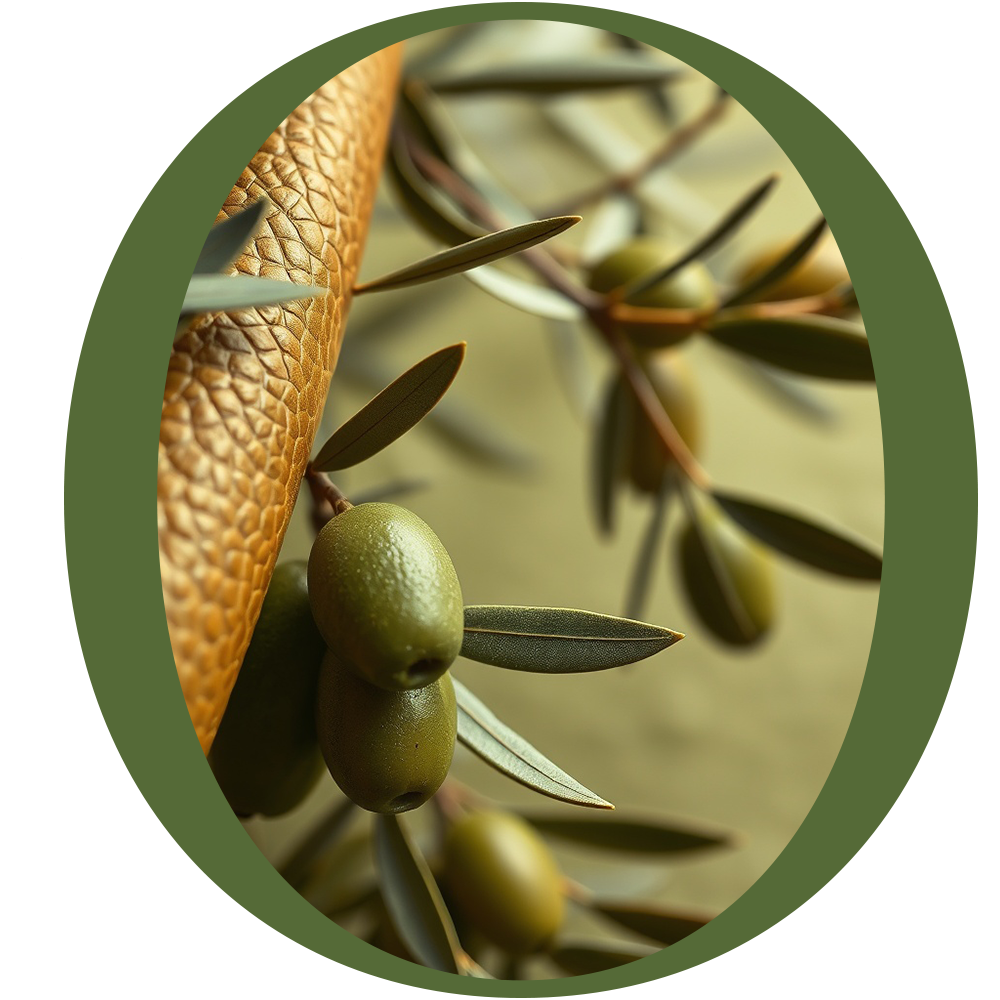
The Olive Tree
Revered forMillennia.Reinvented forTomorrow.
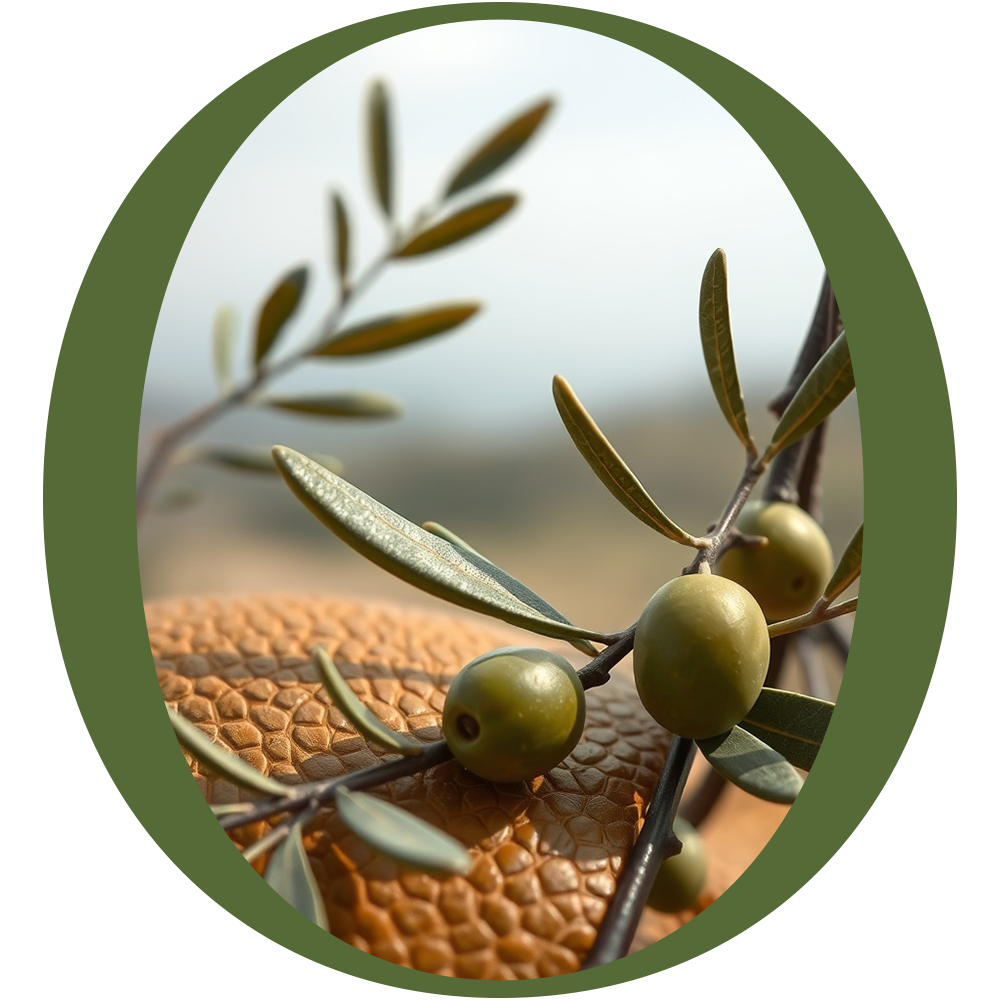
The olive tree has been a symbol of abundance, peace, and sustenance for thousands of years. When olives are pressed for oil, 75% of the harvest becomes pomace – a solid bio-waste that has no food value and is currently burned as fuel, releasing CO₂ into the atmosphere.
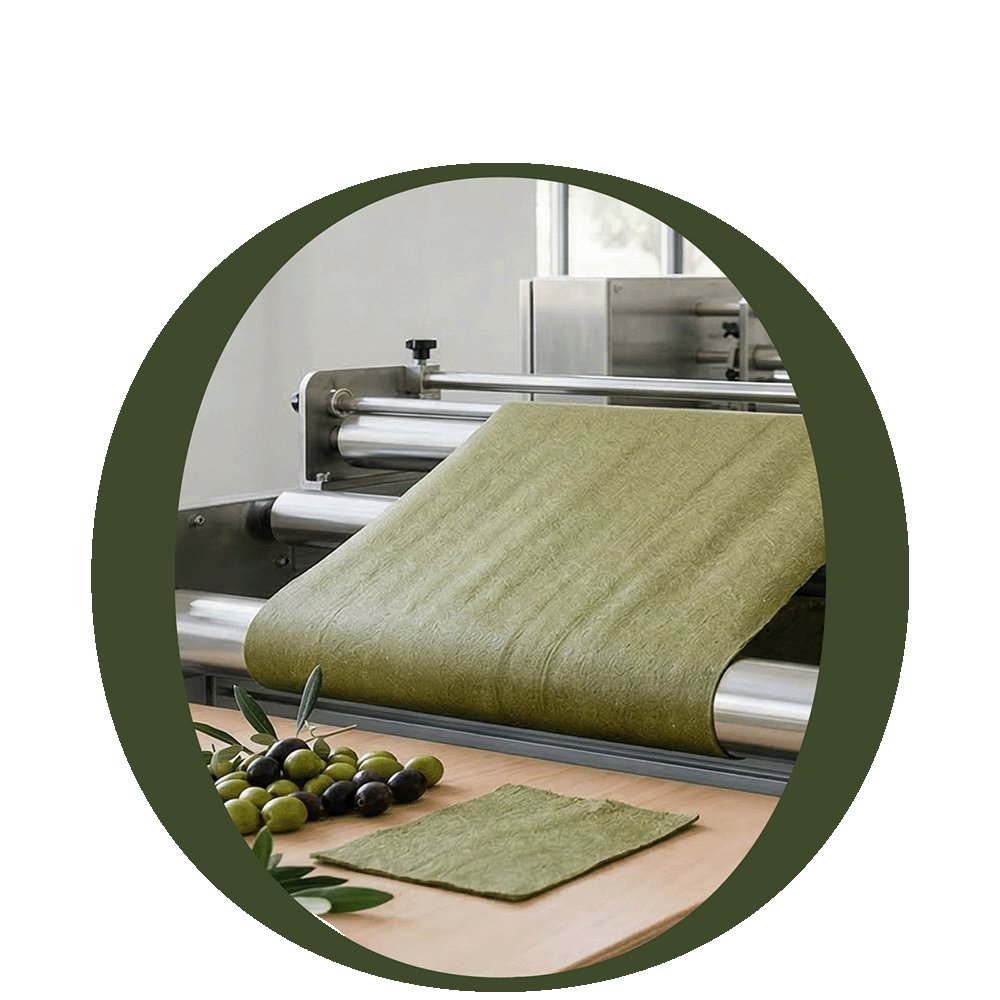
We saw something different in that waste. Oleatex is born from olive pomace – ground, processed, and blended into a patented formula that creates next-gen leather with up to 90% bio-content. From grove to product, within a 100 km radius.
What is Olive Pomace?
- Moist solid residue from olive oil extraction
- Processing 1,000 kg of olives yields 750 kg of pomace
- Currently burned as fuel – releasing CO₂
- No food value, no agricultural use, no additional land
- Locally sourced within 100 km of production
ReducingCarbon Footprint.Not JustOffsetting It.
Environmental Impact
Compared to traditional leather and synthetic alternatives, Oleatex delivers measurable environmental advantages – verified and certified.
Traditional Leather
- High carbon emissions
- Animal-based
- Toxic chemicals
- High water usage
OLEATEX®
- 6× less carbon
- 90% bio-based
- Solvent-free
- Zero water
Synthetic Leather
- Petroleum-based
- Non-recyclable
- Microplastics
- Chemical solvents
Circular Economy
Closing theLoop onOliveWaste
Traditional leather production and synthetic alternatives both rely on virgin resources, harmful chemicals, and high-carbon processes. Oleatex disrupts this cycle entirely – taking olive industry bio-waste and feeding it back into the manufacturing loop.
Our process supports local agriculture, eliminates the need for additional land or water, and produces a material that is itself recyclable – creating a true closed loop from grove to product, and back again.
Olive Industry Benefit
Pomace waste is redirected from landfills and fuel burning into a high-value production cycle.
Leather Industry Disruption
Oleatex offsets carbon emissions of the leather industry, reducing dependency on animal leather and petroleum-based synthetics.
Supporting the UN Sustainable Development Goals
Oleatex supports 11 of the 17 United Nations Sustainable Development Goals through its production model.
Readyto Build withOlive?
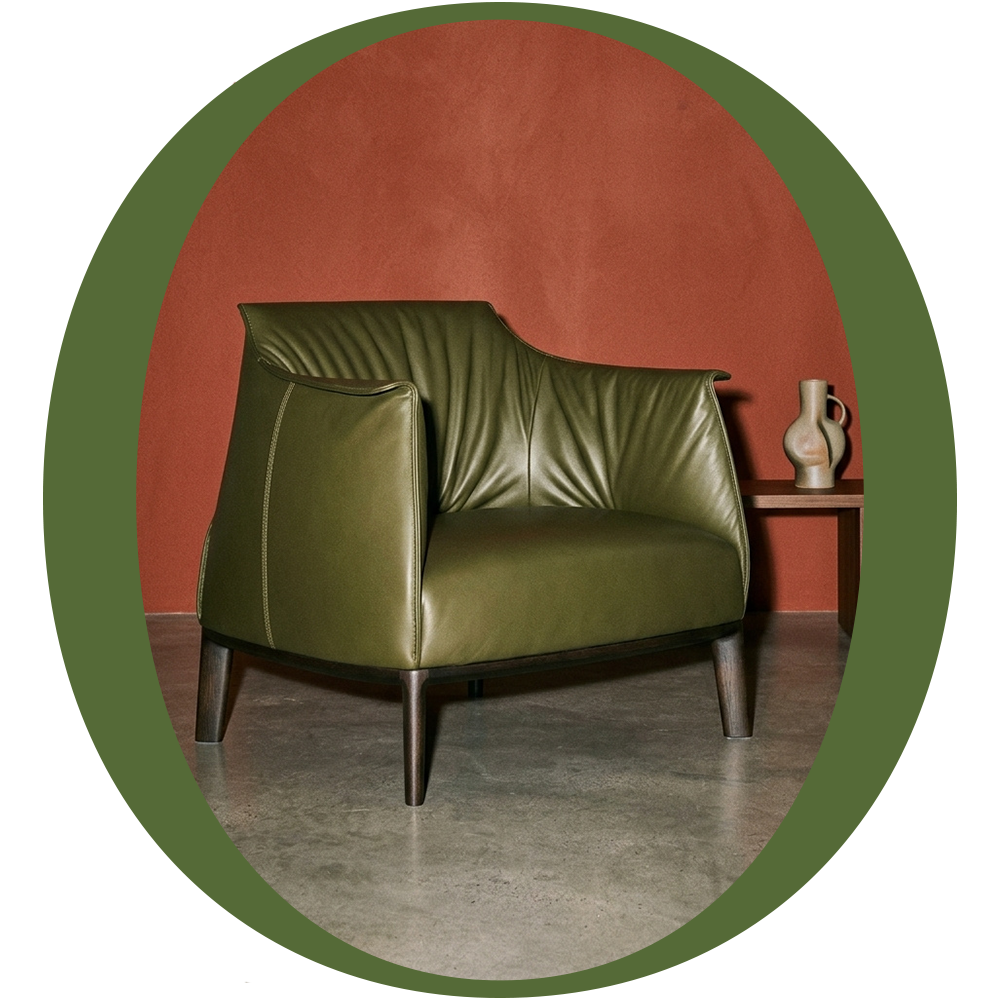
Whether you are in fashion, automotive, furniture, or packaging – Oleatex integrates into your supply chain with the same technical performance you expect from leather.Certified. Scalable. Sustainable.